CARPET MAINTENANCE

. Tuesday, December 26, 2017
0 comments


Doing rug cleaning is vital to maintaining hygiene and cleanliness in your own home. The carpet at home has been stamped with dusty shoes and slippers for several hours. Kids use the same rug and grow prone to illness. Many times meals are dropped on a dirty carpet and taken back with all the likelihood of transferring germs from this to your body. Rug cleaning ought to be done regularly to remove it from dirt, dust, and germs. In this way, you will end up successful in maintaining a clean and healthy surrounding in your house.


A lot of dust is frequently gathered on the carpet. It can be removed by using floor cleaners. The worst consequence of dust accumulation on the carpet is the fact that its color and beauty fades up. It looks dull as an alternative to appearing vibrant. It often seems to be a vintage accessory as a result of dirt and stains. So it is very crucial to maintain carpets neat and tidy.


However, people often easily forget that special feeling of relaxation and soothing will only be persistent or consistent whenever they conserve the carpet. It is imperative to clean and wash the rug as frequently as possible, according to the usage and external conditions and objects that it continues to be subjected to or burdened with.


WHAT IS BITCOIN AND BLOCKCHAIN AND WHY IS IT IMPORTANT?

. Sunday, December 24, 2017
0 comments


Since its inception on the heels of the financial system collapse in 2008, Bitcoin has continuously burst forward higher and higher in value.  From a single Bitcoin being worth $1.00 in early 2011 to well over $5,000 per coin in October 2017.

Every single day that passes the entire world continues to embrace a digital economy... At the forefront of this digital revolution is Cryptocurrency...
This is what we call "Future Money."

With current trends continuing to embrace the freedom and flexibility of digital currencies… it’s only a matter of time before it hits the mainstream market like a tidal wave!

Much sooner than later, you’ll be finding Bitcoin ATMS on every street corner and in every mall.

To learn more about the Blockchain and digital currency technology, click on the link below. The website also currently offers a free CERTIFICATION on the technology.

So HURRY WHILE THE OFFER IS STILL OPEN.

https://futuremoney.io/lessons/bitcoin-blockchain-important/

Join bitconnect today, clink on the link below

https://bitconnect.co/?ref=sholajiraiya

https://hashflare.io/r/22D9A603

https://www.coinbase.com/join/5a23610c680a5700ecbece2d

Alluring Roses FROM AFRICA

. Monday, January 16, 2012
0 comments


Roses, including both those that grow wild and those cultivated by man, perhaps none has acquired more international acclaim than the rose. It has captured man’s imagination for centuries. Poets have written about it, while artists have often depicted it. Shakespeare extolled it with the famous line from Romeo and Juliet: “What’s in a name? That which we call a rose by any other name would smell as sweet.” Thanks to the rose, new friendships have been established and cemented, strained relationships have been restored, and many a sick person has been encouraged.

In addition to all of that, the rose has great economic value. In many countries where climatic conditions favor flower farming, the rose is a major earner of foreign exchange. In Kenya, for example, out of the millions of flowers exported during one recent year, over 70 percent were roses, making the country one of the leading producers in the world.
In times past, before man discovered the flower’s alluring qualities, the rosebush grew freely in the wild. Today, through the use of carefully controlled methods of crossbreeding, some of the more than 100 species of wild roses have been bred to produce the thousands of varieties of roses known today. As a result, the flower has become known worldwide and is found in almost every country on earth. The most popular and widely cultivated is the hybrid tea rose.

 From the farms to your flower vases at home
 Mostly, people buy their roses either from a florist or at a supermarket. These flowers are grown commercially on large farms and require much more attention than the backyard variety. A visit to one such farm located near Nairobi revealed to us the extra care that goes into preparing the flowers for market.
Here, as elsewhere in Kenya, elaborate polyethylene greenhouses readily identify the commercial rose farm. These structures serve several purposes. The newly grafted roses are delicate and require protection from harsh weather. Heavy rain, wind, or direct sunlight can wreak havoc on them. To maintain a constant temperature, it is necessary that cool air enter the greenhouse easily and hotter air be expelled.
Inside the greenhouses there are rows of young flowers in different stages of growth. At this farm several types of roses are cultivated, ranging from the popular hybrid tea rose, cut at a little longer than 27 inches, to the 14-inch-long sweetheart rose, a particular type of hybrid tea rose. The two and a half acres here may contain up to 70,000 plants.
How do the plants receive their nutrients? Ordinary soil is not used. The flower bed is made up of pumice (volcanic rocks) laid on polyethylene sheets. This is a preferred method, as the rocks are free from many soilborne diseases. The drip-irrigation concept is employed to water the plants. In this method small pipes are directed to the flower bed, discharging the water and other nutrients in well-regulated quantities. Being porous, the volcanic material allows water to drain from the plastic bed. Then it is collected and reused.
Despite the specialized care provided, roses can become infected by a number of diseases, mainly caused by funguses. These include botrytis and powdery mildew, which attack the leaves and stems of the plants. Left unchecked, these diseases can adversely affect the flower quality. Applying fungicides helps control the problem.
As time passes, some bright colors begin to show up, a clear indication that the roses are ready for harvesting. The flowers are carefully cut at the tight-bud stage. At this point the petals have yet to unfold. Harvesting at this time enhances the life span of the cut flowers as well as their color retention. However, the harvesting stage may vary slightly from variety to variety. It is vital to cut the flowers in either the morning or the late afternoon, when humidity is high and wilting is slower. Harvested flowers are then taken to the cold room for precooling. This too ensures that the roses remain fresh for a longer period of time.
The flowers will pass through another vital phase—the grading stage. Here they are separated according to color and size. Packaging is done according to customer requirements. Finally, the flowers are ready for market. From this farm they are transported to the main airport in Nairobi, and from there they will be exported to Europe, thousands of miles away. Because they are highly perishable, the flowers should reach the market, local or international, within 24 hours of harvesting.
The next time you receive a bouquet of roses as a gift or buy them from a supermarket or a florist, pause and think of the long journey they may have made, possibly even from Africa. Possibly it will enhance your appreciation for this beautiful plant.

Will There Ever Be a Blue Rose?

.
0 comments

Will There Ever Be a Blue Rose?

The rose has come a long way, and its journey does not seem to have come to an end. Many new techniques of breeding and cultivation are being integrated into this industry. Few flowers can produce the different shades of color that roses do. Which color fascinates you the most? White, yellow, pink, dark crimson, or maroon? Most of these are the result of various methods of crossbreeding.

As an example, did you know that while people speak of “red” roses, true red flowers were originally absent from the rose family? The family lacks the gene that causes the red pigment. The bright-red color is a result of a genetic mutation about 1930, eventually resulting in the vibrant-red colors seen in roses today. In all rose varieties, one color was long missing—blue. The gene for producing blue, delphinidin, does not occur naturally in the rose family. However, after years of joint research by an Australian company and a Japanese company, a “blue” rose was created in 2004 using genetic engineering. Further effort is needed, though, to achieve a bluer hue.

The Beautiful Moth

. Tuesday, October 4, 2011
0 comments


A moth is an insect closely related to the butterfly, both being of the order Lepidoptera. Moths form the majority of this order; there are thought to be 150,000 to 250,000 different species of moth about ten times the number of species of butterfly), with thousands of species yet to be described. Most species of moth are nocturnal, but there are crepuscular and diurnal species.


"Moths are about as harmless as a creature can get," explains John Himmelman, cofounder of the Connecticut Butterfly Association. "They have no biting mouth parts, and some adults, such as the well-known luna moth, don't eat at all. They don't carry rabies or any other diseases, they don't sting . In fact, most people don't realize that butterflies are actually day-flying moths."
Everyone admires butterflies, but few stop to admire the beauty and variety of moths. 'Beauty?' you may say, skeptically. Some think of the moth as merely a lackluster cousin of the beautiful butterfly. In fact many hardly thought of moths except when putting away my winter clothes and placing mothballs around them in an attempt to repel the clothes moth. But as adults, moths do not eat fabric at all—they only do so while in the larval stage as caterpillars.


Among the species of moth is the cecropia, or robin moth, one of the largest moths in North America It is a member of the Saturniidae family, or giant silk moths. Females with a wingspan of 160 mm or more have been documented. It is found as far west as the Rocky Mountains and north into the maritime provinces of Canada. The Larvae of these moths are most commonly found on Maple trees, but they have been known to feed on Wild Cherry and Birch trees among many others.and has a life cycle of one year. Because the adult moths do not have mouth parts they are unable to eat. As a result, the lifespan for an adult Cecropia moth is generally only 7 to 10 days in the wild, perhaps a little longer or shorter, depending on how much movement the moth makes. For instance, if temperatures are cooler, the moth may remain mostly inactive, which will increase its lifespan. In captivity, this lifespan can be extended to about a month by placing the moth in the fridge directly after it hatches and its wings are dry. [Those who rear the moths may find this necessary to synchronize mating.


The scales on a moth's wings are extremely delicate, you should never pick it up by its wings. However, if you place your outstretched hand in front of a moth, it may walk onto your finger. When I tried this, the lovely creature rewarded me by resting on my middle finger.

How Photography Saw the Light.

. Tuesday, March 29, 2011
0 comments

The story goes that the visitors of Italian physicist Giambattista Della Porta (1535?-1615) were shocked. On the wall in front of them, images of small upside-down people were moving around. Panic-stricken, the onlookers scurried out of the room. Della Porta was put on trial for sorcery!
SO MUCH for trying to amuse his guests by introducing them to a camera obscura—literally, in Latin, “dark chamber.” The principle on which the camera works is simple, but the results can be spectacular. How does it work?
When light enters a dark box or room through a tiny hole, an inverted picture of the outside is projected on the far wall. What Della Porta’s guests saw was nothing but actors performing outside. The camera obscura was a forerunner of the modern camera. Today you may be one of the millions of people who own a camera or at least have used the ubiquitous, inexpensive disposable camera.
The camera obscura was not even new in Della Porta’s day. Aristotle (384-322 B.C.E.) observed the principle on which the camera would later work. The 10th-century Arabic scholar Alhazen vividly described it, and the 15th-century painter Leonardo da Vinci wrote about it in his notebooks. The 16th-century introduction of the lens enhanced the accuracy of the camera, and many artists used it for accurate renderings of perspective and scale. But in spite of many attempts, making the resulting images permanent remained elusive until the 19th century.

French physicist Joseph-Nicéphore Niepce possibly started his quest to make permanent photos as early as 1816. But his real breakthrough came when he was experimenting with lithography and came across a light-sensitive substance called bitumen of Judaea. Sometime in the mid-1820’s, he put a bitumen-coated pewter plate in a camera obscura facing a window of his estate and exposed it for eight hours. Not even the most inexperienced of today’s amateur photographers would be proud of the blurry picture of a building, a tree, and a barn that resulted, but Niepce had reason to be. His picture was most likely the first permanent photograph ever taken!
To develop his method further, in 1829, Niepce entered a partnership with a dynamic entrepreneur named Louis Daguerre. In the years following Niepce’s death in 1833, Daguerre made some important progress. He used silver iodide as a coating on copper plates. This proved to be more light sensitive than bitumen. By accident he found that when he treated the plate with mercury fumes after exposure, a latent picture appeared clearly. This reduced the exposure time dramatically. When Daguerre later discovered that washing the plate with a salt solution prevented the picture from darkening over time, photography was ready to take the world by storm.

When Daguerre’s invention, called daguerreotype, was presented to the public in 1839, the reaction was overwhelming. Scholar Helmut Gernsheim writes in his book The History of Photography: “Perhaps no other invention ever captured the imagination of the public to such a degree and conquered the world with such lightning rapidity as the daguerreotype.” An eyewitness to the public release wrote: “An hour later, all the opticians’ shops were besieged, but could not rake together enough instruments to satisfy the onrushing army of would-be daguerreotypists; a few days later you could see in all the squares of Paris three-legged dark-boxes planted in front of churches and palaces. All the physicists, chemists, and learned men of the capital were polishing silvered plates, and even the better-class grocers found it impossible to deny themselves the pleasure of sacrificing some of their means on the altar of progress, evaporating it in iodine and consuming it in mercury vapour.” The Paris press quickly named the craze daguerréotypomanie.
The outstanding quality of the daguerreotypes moved British scientist John Herschel to write: “It is hardly too much to call them miraculous.” Some even ascribed magical powers to the invention.
But not everybody hailed the new invention. In 1856 the king of Naples banned photography, possibly because it was thought to be associated with “the evil eye.” When seeing a daguerreotype, French painter Paul Delaroche exclaimed: “From today painting is dead!” The invention also caused great anxiety among painters who saw it as a threat to their livelihood. One commentator expressed the fears of some when he said: “Photography’s stringent truth to optical reality could nullify the individual’s apprehension of beauty.” In addition, photographic pictures were even criticized for the relentless realism with which they shattered cherished illusions of beauty and youth.

William Henry Fox Talbot, an English physicist, believed that he had invented photography and was thus taken aback by the announcement of Daguerre’s invention. Talbot had been putting silver-chloride-coated sheets of paper in a camera obscura. He waxed the resulting negative for transparency, placed it over another coated paper, and then exposed it to sunlight, thus producing a positive image.
Although initially a lot less popular and of inferior quality, Talbot’s process proved to have greater potential. It allowed for multiple copies of one single negative, and paper copies were cheaper and easier to handle than the fragile daguerreotypes. Modern photography is still based on Talbot’s process, whereas the daguerreotype, in spite of its initial popularity, proved to be a dead end.
Niepce, Daguerre, and Talbot were, however, not the only contenders for the title of Father of Photography. Following Daguerre’s 1839 announcement, at least 24 men—from Norway in the north to Brazil in the south—stepped forward claiming to have invented photography.

One social reformer, Jacob August Riis, early on saw photography as a golden opportunity to bring poverty and suffering to the attention of the public. In 1880 he started taking pictures of New York City slums after dark by using burning magnesium powder in a frying pan as a flash—a method not entirely without risk. He twice set ablaze the house in which he was working, and once his own clothes caught fire. His pictures are said to have been one of the reasons President Theodore Roosevelt undertook a number of social reforms when he moved into the White House. The persuasive power of a series of scenic photographs by William Henry Jackson also prompted the U.S. Congress in 1872 to make Yellowstone the world’s first national park.
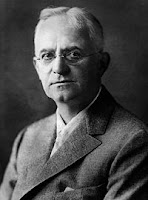
In the late 1880’s, many potential photographers were still held back because of the cost and complexity of photography. But in 1888 when George Eastman invented the Kodak, a portable easy-to-use box camera containing a roll of flexible film, he paved the way for unlimited amateur photography.
After exposing the roll, the customer would send the entire camera to the factory. There the film was processed and the camera was reloaded and sent back, along with the developed photos—all this at a fairly low cost. The slogan “You push the button, we do the rest” was no exaggeration.
Photography for the masses had been born, and the billions of exposures taken annually today indicate that its acceptance has never abated. And now, adding to its popularity, there are digital cameras that define an image in megapixels. They use a tiny memory stick that may hold hundreds of photos. High-quality prints can even be made using a home computer and a printer. No doubt about it, photography has come a long way.

THE DALMATIN BIBLE

. Monday, March 28, 2011
0 comments

THE last of the barrels with their valuable contents arrived in Slovenia in the late 1500’s. For two years they had been in transport by various routes. To disguise their contents, the barrels had been labeled “playing cards” or “store supplies.” Concealed inside were leather-bound volumes of the first complete Bible in the Slovenian language.
The valuable consignment was the fulfillment of the dream of two dedicated men—Jurij Dalmatin and Primož Trubar, who devoted their lives to translating the Bible into the common language of their people. While these men may not be featured in many history books, their names can be added to the list of those who made a great contribution to early Bible translation.
Dalmatin, the man responsible for the secret transport of the Bibles, had included one special richly bound copy for Trubar, his friend and adviser. Let us consider the challenges these two men faced in making the Bible available in the common tongue of their fellow countrymen.

In the 16th century, the Holy Roman Empire, which was closely associated with the Roman Catholic Church, was still entrenched in most of Europe. However, the Protestant Reformation was well under way, and the effects of the movement had filtered into the towns and villages of what is present-day Slovenia. Trubar, a local clergyman there, was among the first to adopt Protestant convictions.
Since Latin was the language of the Catholic Church, only a privileged few who were schooled in that ancient tongue could understand church services and the Bible. Yet, the Reformers said that church services should be held in a language understood by all. Therefore, by the mid-1500’s, some Bible passages were read in the local Slovenian language during church services. This was made possible because the Slovenian equivalent of certain texts was written in the margins of the Latin missal, or Mass book, that was used by the clergy.
However, Trubar wanted to have the entire Bible in Slovenian. Since there was as yet no Slovenian alphabet, Trubar invented one, and in 1550 he wrote the first book printed in the Slovenian language. In it he included some Bible verses from Genesis. Later, he also translated the Psalms into Slovenian and eventually the entire New Testament, or Christian Greek Scriptures.
Yet, Trubar recognized that he did not possess the language skills needed to carry out his ambition to translate the entire Bible into Slovenian. In Jurij Dalmatin, a gifted young student, he saw someone who could help him accomplish his goal.

 Dalmatin was born into a poor family in 1547 in a village called Krško, located in what is today southern Slovenia. He attended the local school run by an early convert to Protestantism, and this greatly influenced his later religious inclinations. With the support of Trubar as well as a schoolteacher and the local parish, Dalmatin attended a religious school and later went to a university in Germany. He thereby perfected his Latin and German, learned Hebrew and Greek, and completed his studies in philosophy and theology.
  Although Dalmatin studied abroad, he was encouraged by Trubar to value and cultivate his mother tongue, Slovenian. When Dalmatin was attending university, while he was still in his 20's, he began the great task of translating the Bible into his mother language ultimately making Trubar's fervent wish to have the complete Bible in Slovenian his main goal in life.

 Plunging into the project with great enthusiasm, Dalmatin began by translating the Hebrew Scriptures. Apparently, he translated from the original languages but with close reference to Martin Luther’s German translation of the Latin Vulgate. As for Trubar, by 1577 he had translated the entire Christian Greek Scriptures into Slovenian, as mentioned previously. Dalmatin now corrected and improved Trubar’s text, once again relying heavily on Luther’s German Bible translation. He removed a lot of Trubar’s Germanisms and made the translation more uniform. Dalmatin may have used his knowledge of Greek in his translation work, but scholars still debate whether he consulted early Greek texts or not.

Because the Slovenian alphabet had been introduced only a few decades before, Dalmatin faced a daunting task. Moreover, the vocabulary was small, and Slovenian reference books were nonexistent. Therefore, it required a great deal of ingenuity to render the text into understandable Slovenian.
The Counter Reformation movement also added to the difficulties. Since the printer in Slovenia was exiled, Bible printing had to be done on foreign soil. This was why camouflage was needed when Bibles were shipped into the country. Yet, despite the obstacles, Dalmatin achieved his goal in only ten years, apparently while he was still in his early 30’s.
Under Dalmatin’s supervision the first printing of 1,500 copies of the Bible took place in seven months. Many called the Bible a literary masterpiece and a work of art, as it was beautifully illustrated with 222 woodcuts. Many of the original Bibles are still in existence, and the translation has been used as a basis for modern-day versions of the Bible in Slovenian. The work of these two men has contributed to the fact that today Slovenians can read God’s Word in their mother tongue.

 THE DIVINE NAME
  Dalmatin included the following explanation in the foreword of his translation of the Holy Bible: “Wherever the word LORD is printed in capital letters, this means the LORD God alone whose name is יהוה, Jehovah, in the Jewish language. This name belongs only to the LORD God and no one else.”

The Anthony Roll.

. Thursday, March 17, 2011
0 comments

The Anthony Roll is a rocord of ships of the English Tudor navy of the 1540s, named after it's creator, Anthony Anthony. It originally consisted of three rolls of vellum, depicting 58 naval vessels along with information on their size, crew, armament, and basic equipment

The rolls were presented to King Henry VIII in 1546, and were kept in the royal library. In 1680 Charles II
gave two of the rolls to Samuel Pepys, who had them cut up and made into a single volume, which is now in the Pepys Library at Magdalene College, Cambridge. The third roll remained in the royal collection
until it was given by William IV to his daughter, Mary Fox, who sold it to the British Museum in 1858; it is now owned by the British Library. The Anthony Roll is the only known fully illustrated inventory of ships if the English navy in the Tudor period. while the inventories listed in its text have proven to be highly accurate, most of the ship illustrations are rudimentary and made according to a set forrmular. The only known contemporary depictions of prominent Tudor vessels like the Henry Grace a Dieu and the Mary Rose are contained in the Anthony Roll.

   Since the Mary Rose sank by accident in 1545 and was successfully salvaged in the 1982, comparison between the information in the Roll and the physical evidence of the Mary Rose has provided new insights into the study of the naval history of the period.


Plovdiv—A Modern City With Ancient Roots!

. Thursday, December 9, 2010
0 comments


PLOVDIV is older than Rome, Carthage, or Constantinople. Some 350,000 people live in this city, which sprawls over seven hills in south-central Bulgaria.
Walk down the city’s ancient streets, and you will see abundant evidence of its glorious, tumultuous past. Edifices built by the Thracians, a feared race that lived hundreds of years before the Common Era, can be seen, as well as Greek pillars, Roman theaters, and Turkish minarets.

The “Loveliest of All Cities”
Archaeological discoveries in and around the city reveal that it was inhabited well before the first millennium B.C.E. Roman historian Ammianus Marcellinus wrote that before the fourth century B.C.E., a Thracian fortified settlement named Eumolpias existed at the site of present-day Plovdiv. In 342 B.C.E., Eumolpias was conquered by Philip II of Macedonia, the father of Alexander the Great. Philip changed the city’s name to Philippopolis.
When the Romans gained control of the city in 46 C.E., they called the city Trimontium and made it the capital of Thrace. The Romans were eager to hold this city because it straddled the Via Diagonalis, an important crossroad of the Balkan region. The Romans added a stadium, an amphitheater (seen above), numerous baths, and many other typically Roman buildings.
Lucian of Samosata described the natural beauty of this city, which was set among three hills at the base of the Rhodope Mountains.
“THE
CITY OF SEVEN HILLS”
A modern visitor to Plovdiv may find it hard to locate the city’s famed seven hills, or tepes, as they are called. A hundred years ago, one of the hills, Markovo Tepe, was demolished as the city expanded. Six hills remain as silent witnesses of Plovdiv’s ancient past.
Three are obvious to the visitor: Bunardjik Tepe, Djendem Tepe, and Sahat Tepe, called such by the Turks because of the clock tower built on this hill. Trimontium, as the Romans called Plovdiv, comprises the three remaining hills: Djambaz Tepe, the largest and highest hill; Taksim Tepe; and Nebet Tepe, which in Turkish means “Guard Hill.”
A stroll through the area of Trimontium takes one into the heart of Plovdiv’s past, from the ancient ruins and walls of Philippopolis to the still-functioning Roman theater. Of interest too are the well-preserved houses of the Bulgarian National Revivalist era that line the narrow cobbled streets.
It lay near the Maritsa River, with the fertile Thracian plain spreading out before it. Lucian wrote that Trimontium was “the greatest and loveliest of all cities!”
After the decline of Rome in what came to be called the Dark Ages, Slavic peoples settled the area. Over the next few centuries, crusaders looted the town on four separate occasions. Then, in the 14th century, a political change took place when the city fell to the Turks. They renamed the city Philibé and remained the city’s masters until 1878. The Jumaia Mosque with its minaret and sundial still stands as a reminder of that time.
When Russia defeated Turkey in 1878, the city’s name was changed from Philibé to Plovdiv. The city was given an economic boost in 1892 when it hosted a trade fair. From then on, Plovdiv became the main trading center of Bulgaria. During the second world war, the Nazis briefly controlled the city but were ousted by the Soviets in 1944. Then, in 1989, Plovdiv slipped from the grip of yet another mighty empire when the Soviet Union collapsed. Some of Plovdiv’s past masters may have been sincere; still, they were hampered by the imperfections that characterize human rule.

SUN LIGHT EXPOSURE:Should you worry about it?

.
0 comments

“As ozone depletion becomes more marked and as people around the world engage more in sun-seeking behaviour, the risk of developing health complications from over-exposure to UV [ultraviolet] radiation is becoming a substantial public health concern.”—DR. LEE JONG-WOOK, FORMER DIRECTOR GENERAL OF THE WORLD HEALTH ORGANIZATION.
MARTIN, a fair-skinned man from Northern Europe, fell asleep in the shade of a beach umbrella on the Italian coast. When he awoke, he found that the shade had moved and that his legs were no longer white but an angry red. “I had to go to the hospital emergency room,” Martin explains. “My legs were as stiff and swollen as two sausages. In the two or three days that followed, I was in terrible pain. I could neither stand nor bend my legs. The skin was so tight that I was afraid it would burst.”
Many believe that only light-skinned people like Martin need to fear exposure to sunlight. However, while darker-skinned people have greater protection against sunburn, they can still develop skin cancer. And their cancer often goes undetected until it reaches a dangerous stage. Other dangers connected with overexposure to the sun include damage to the eyes and to the immune system, problems that may not appear until years after the damage is done.
Of course, the level of UV radiation is generally higher the closer one gets to the equator. So those living in the Tropics or the subtropics and those traveling to such areas should take extra precautions. One reason for doing so is that the atmosphere’s protective ozone layer has reportedly become thinner in recent years. Let’s examine some of the potential dangers posed by overexposure to the sun.
Eye Damage
As many as 15 million people earth wide are blind because of cataracts, the world’s leading cause of blindness. Cataracts form when proteins in an eye’s lens unravel, tangle, and accumulate pigments that cloud the lens. Cataracts are one of the long-term effects of exposure to UV radiation. In fact, it is estimated that up to 20 percent of cataracts are caused or worsened by chronic sun exposure.
Sadly, the so-called cataract belt near the equator includes developing countries where the majority of people are poor. Thus, millions of poor people in Africa, Asia, Central America, and South America are blind because they cannot afford to have an operation to remove their cataracts.
Damage to the Skin
One third of all cancers diagnosed worldwide are skin cancers. Some 130,000 new cases of melanoma, the most dangerous form of skin cancer, are reported each year. And between two and three million new cases of other skin cancers, such as basal cell carcinomas and squamous cell carcinomas, occur. It is estimated that some 66,000 people die each year from skin cancer.
How does sunlight damage your skin? The most common and best-known acute effect of overexposure to the sun is sunburn, or erythema. Its immediate effects can last for days and may include blistering and peeling.
When sunburn occurs, UV radiation kills most of the cells in the outer layer of the skin and damages deeper layers. Any change in the color of a person’s skin as a result of sun exposure is a sign of damage. Cancer can result when damage occurs to the DNA of genes that control the growth and division of skin cells. Sunlight also alters the texture of the skin and weakens its elasticity. This leads to premature wrinkling and sagging, as well as easy bruising.
Immune-System Damage
Studies have shown that when the skin absorbs too much UV radiation, the activities of certain parts of a person’s immune system are adversely affected. This may reduce the body’s ability to defend itself against some diseases. Even moderate sun exposure has been known to increase the risk of bacterial, fungal, parasitic, or viral infections. Many people notice that being in the sun causes them recurrent eruptions of cold sores, or herpes simplex. A World Health Organization (WHO) report explains that one category of ultraviolet light, known as UVB, “appears to reduce the effectiveness of the immune system—in the case of cold sores it can no longer keep the virus Herpes simplex under control which results in re-activation of the infection.”
Hence, when it comes to cancers, sunlight can deliver a devastating one-two punch. First, by directly provoking DNA damage and then by reducing the immune system’s natural ability to deal with such damage.
Wisely, we need to take precautions so that we do not overexpose ourselves to the sun. Our health, and indeed our very lives, may be at stake.


HOW
TO PROTECT YOURSELF
▪ Limit your exposure during the midday hours between 10:00 a.m. and 4:00 p.m., when UV radiation is particularly intense.
▪ Try to stay in the shade.
▪ Cover your arms and legs with tightly woven, loose-fitting clothes.
▪ Wear a wide-brimmed hat to protect your eyes, ears, face, and the back of your neck.
▪ Good-quality wraparound sunglasses, or sunglasses with side panels, that provide 99 to 100 percent UVA and UVB (categories of ultraviolet light) protection will greatly reduce the risk of eye damage.
▪ Use—and liberally reapply every two hours—a broad-spectrum sunscreen with a sun protection factor of at least 15.
▪ Since sunlamps, sun beds, and tanning parlors use UV radiation, which may damage the skin, WHO recommends avoiding them.
▪ Be careful to protect babies and young children, whose skin is particularly delicate.
▪ Never fall asleep in the sun.
▪ If you develop a mole, a freckle, or a spot that you are concerned about, see your doctor.

Four major tips to becoming financially successful!!!

. Sunday, November 28, 2010
0 comments

Financial success is not always easy but if we can be dedicated in doing some few things, then it’s going to be easy for us. Below are four major tips we need to know and practice if we’re to become financially successful.
Save a lot of your monthly income: it might be really impossible to do but if you try as much as possible to save a major part of your monthly income then you’ll just keep doing so because of the results you’ll see in doing so. I know so because I’ve also given it a try and even had some friends do the same and their responses were impressive.
Study and take advantage of Tax:   a major step in becoming financially successful is being wise and strategic with your money. You need to educated yourself and you need to really invest your time into understanding your options within the US tax systems, then take the steps necessary to take advantage of every tax deduction or credit that you are legally entitled to…the IRS is not going to do that for you!  If you don’t educate yourself, and take advantage of good things like Electric Vehicle Tax Credits, or Energy Efficiency tax savings, you'll have yourself to blame for the outcome.
Try as much as possible to live a debt free live: this is very important for us if we’re to be successful in our entire endeavor to become financially successful. Because the more you get yourself into debt, the more impossible it becomes for you to have any savings at all.
Work hard: most of the people who have become financially successful did so through hard work. It may not be easy but we have to be disciplined and hard working if we’re to become financially successful.

Tax Codes - Capital Gains Tax Rates

. Tuesday, November 23, 2010
0 comments

Contributed-By: Rich Carreiro (rlcarr at animato.arlington.ma.us), Chris Lott (contact me)

While reading misc.invest.*, you may have seen people talking about "long-term gains" or "short-term losses." Despite what it sounds like, they are not talking about investment strategies, but rather a potentially important part of the United States tax code. All this matters because the IRS taxes short-term and long-term gains differently.
The "holding period" is the amount of time you held some security before you sold it. For reasons explained later, the IRS cares about how long you have held capital assets that you have sold. The nominal start of the holding period clock is the day after the trade date, not the settlement date. (I say nominal because there are various IRS rules that will change the holding period in certain circumstances.) For example, if your trade date is March 18, then you start counting the holding period on March 19. Then, you compute the length of the holding period using the day of the month (not the number of days). Continuing the example, on April 18, your holding period is one month, on April 19 your holding period is more than one month, and so on.

With holding period defined, we can say that a short-term gain or short-term loss is a gain or loss on a capital asset that had a holding period of twelve months or less. Similarly, a long-term gain or long-term loss is a gain or loss on a capital asset that had a holding period of more than twelve months.
Note that a short-sale is considered short-term regardless of how long the position is held open. This actually makes a kind of sense, since the only time you actually held the stock was between when you bought the stock to cover the position and when you actually delivered that stock to actually close the position out. This length of time is somewhere from minutes to a few days.
Net capital gains and losses are fully part of adjusted gross income (AGI), with the exception that if your net capital loss exceeds $3,000, you can only take $3,000 of the loss in a tax year and must carry the remainder forward. Carried-over losses are used to reduce capital gains in a future year, and can be carried over until all used up. If you die with carried-over losses, they are lost. Short-term and long-term loss carryovers retain their short or long-term character when they are carried over.
Discussions from this point on talk about the various tax rates on capital gains. It is important to note that these rates are only the nominal rates. Because capital gains are part of AGI, if your AGI is such that you are subject to phaseouts and floors on your itemized deductions, personal exemptions, and other deductions and credits, your actual marginal tax rate on the gains will exceed the nominal tax rate.
Short-term gains are taxed as ordinary income. Therefore, the nominal tax rate will be whatever tax bracket you are in. More explicitly, it will be taxed at the federal tax rate (bracket) as determined by your taxable (not gross) income line on your federal tax return.
The tax treatment of long-term gains is somewhat more complicated, and depends on your income. Long-term gains are taxed at 5% if you are in the 10% or 15% federal tax brackets (for tax year 2004, up to about $58K for married filing jointly, and less for others). Long-term gains are taxed at 15% if you are fall in one of the higher income-tax brackets (e.g., 25%, 28%, and so on). The long-term gains are included when figuring out your bracket. However, the 5%/15% rate doesn't apply to all long-term gains. Long-term gains on collectibles, some types of restricted stock, and certain other assets are instead subject to a different rate, which may be as high as 28%. And certain kinds of real estate depreciation recapture are taxed no higher than 25%.
Just to keep up with the history, in 2001 and 2002 the tax man offered low rates on sales of assets held 5 or more years. Those rates were 8% and 18% depending on the taxpayer's income-tax bracket. Those so-called "ultra-long-term gains" were swept away by tax-law changes of 2003.
Here's a summary table:


Tax bracket Short-term rate Long-term rate
10% 10% 5%
15% 15% 5%
25% 25% 15%
28% 28% 15%
33% 33% 15%
35% 35% 15%
 
As you can see, there are some large differences among these rates. While you should never let the income tax "tail" wag the prudent investing "dog," the long/short term distinction is something to keep in mind if you are considering selling at a gain and are getting close to one of the holding period boundaries, especially if you are close to qualifying for long-term treatment.
Now what happens if you have both short-term capital gains and losses, as well as long-term gains and losses? Do short-term losses have to offset short-term gains? Do long-term losses have to offset long-term gains? Well, the rules for computing your net gain or loss are as follows.

  1. You combine short-term loss and short-term gain to arrive at net short-term gain (loss). This happens on Sched D, Part I.
  2. You combine long-term loss and long-term gain to arrive at net long-term gain (loss). This happens on Sched D, Part II.
  3. You combine net short-term gain (loss) and net long-term gain (loss) to arrive at net gain (loss). This happens on Sched D, Part III.
    • If you have both a short-term loss and a long-term loss, your net loss will have both short-term and long-term components. This matters if you have a loss carryover (see below).
    • If you have both a short-term gain and a long-term gain, your net gain will have both short-term and long-term components. This matters because only the long-term piece gets the special capital gains tax rate treatment.
    • If you have a gain in one category and a loss in another, but have a gain overall, that overall gain will be the same category as the category that had the gain. If you have a loss overall, that overall loss will be the same category as the category that had the loss.
  4. If you have a net loss and it is less than $3,000 ($1,500 if married filing separately) you get to take the whole loss against your other income. If the loss is more than $3,000, you only get to take $3,000 of it against other income and must carry the rest forward to next year. When taking the $3,000 loss, you must take it first from the short-term portion (if any) of your loss. The Capital Loss Carryover Worksheet in the Sched D instructions takes you through this.
  5. If you have a net gain, the smaller of the net gain or the net long-term gain will get the special tax rate. This happens on Sched D, Part IV.

The Macadamia Nut (Native Delicacy From Australia)

. Monday, November 15, 2010
0 comments


The nuts are a valuable food crop. Only two of the species, Macadamia integrifolia and Macadamia tetraphylla, are of commercial importance. The remainder of the genus possess poisonous and/or inedible nuts, such as M. whelanii and M. ternifolia; the toxicity is due to the presence of cyanogenic glycosides.
Botanist Walter Hill watched his young assistant in horror. The boy had just eaten nuts from a newly discovered species of tree growing in the subtropical rain forests of southeast Queensland, Australia. Hill had heard that the nuts were poisonous. But the lad neither became ill nor dropped dead. Instead, he found himself agreed. Soon thereafter he began distributing macadamia seedlings to friends and botanists around the world.
Today, some 150 years later, macadamia nuts are popular worldwide – and for good reason. The journal Chronica Horticulturae explains: “The macadamia is considered one of the world’s finest gourmet nuts because of its unique, delicate flavor, its fine crunchy texture, and rich creamy colour.” Little wonder that macadamia nuts are Australia’s most successful indigenous food crop!
Macadamia trees flourish along the subtropical coast of Australia. Among nine of the species, only two produce edible nuts, which consists of a fibrous outer husk; a tan, spherical shell, and a marble-size, cream-colored kernel.
The shell is however really tough to crack and is also used for making excellent industrial abrasive. The Aborigines used rocks. Pioneer orchardist John Waldron used a hammer and anvil to open about some eight million nuts over a period of 50 years. Machines were also used to crack open the nuts but they damaged the kernel which were not acceptable and soon better designs were made with more effective results.
The macadamia tree also had a problem of reproduction. When planted, nuts from good trees produced poor quality offspring. And all efforts at grafting failed. And faced with this difficulty, cultivation for commercial use stopped almost came to a stop until the Hawaiians found a way to solve the problem. They made the needed breakthroughs. And soon enough were supplying about 90(%) percent of the world’s macadamia nuts. And later on the nuts soon came to be known as Hawaiian nuts.
Later on, Australian growers in the 1960’s took the macadamia nut as a commercial crop, using the methods the Hawaiian people, and soon enough the local industry yielded in growth which then increased Australia’s production to about 50(%) percent of the world’s macadamia nuts. These nuts also grow in Central America, Asia, and Africa.
Are macadamia nuts healthful and healthy? A government fact sheet on macadamia-nut culture says “that the oil content of the nut which is (largely monounsaturated oil, or good oil) exceeds 72%, which is makes it the highest of any oil-giving nut.” Actually a modest consumption of the nuts can reduce harmful low-density cholesterol and lower high blood pressure.
Macadamia nuts is a a very good food source for everyone, some people prefer macadamia nuts simply straight from the shell, roasted, or salted. And some people just prefer it in chocolate candy, premium ice cream, and gourmet cookie.

CHECKOUT THE PEACOCK MANTIS SHRIMP’S EYES (Odontodactylus scyllarus) !!!

.
0 comments


The Peacock mantis shrimp Odontodactylus scyllarus has, like many other invertebrates, a compound eye composed of visual units called ommatidia. What makes this wonderful sea animal's eyes unusual is that they have ten different types of photoreceptors, as researchers Thomas Cronin of the University of Maryland and Justin Marshall of the University of Sussex in England reported in May. Humans manage with just three kinds of receptors for color vision; while some species have four or five, none comes close to this shrimp's variety of receptors, most of which are found in a band of ommatidia across the middle of its circular eye. No one is sure what the adaptive advantage of this system is, but it may allow mantis shrimp, which have brightly colored and varied markings, to recognize each other.
The peacock mantis shrimp is found on Australia’s Great Barrier Reef, equipped with the most complex eyesight in the animal kingdom. Dr. Nicholas Roberts says “It is really exceptional, outperforming anything we humans have so far been able to create.”
The peacock mantis shrimp can perceive polarized light and process it in ways that we humans cannot. Polarized light waves can travel along a straight line or rotate in a corkscrew motion. Unlike other creatures, the mantis shrimp cannot only see polarized light in its straight-line or corkscrew forms but is also able to convert the light from the one form to the other. This gives the shrimp enhanced vision.
DVD players work in a similar way. To process information, DVD player must convert polarized light aimed at a disc into a corkscrew motion and then change it back to a straight-line format. But the peacock mantis shrimp goes a step further. While a standard DVD player only converts red light-or in higher-resolution players, blue light-the shrimp’s eye can convert light in all colors of the visible spectrum.
Researchers believe that using the peacock mantis shrimp’s eye as a model, engineers could develop a DVD player that plays discs with far more information than today’s DVDs. Dr. Roberts says “What makes it particularly exciting is how beautifully simple this sea animal's eyes is, and that it also works much, much better than any attempts that humans have made to construct a device.”

ENERGY FOR YOUR HOME: NATURAL GAS

.
0 comments

NATURAL GAS supplies more than 20% of the world’s total energy requirements. What is the source of natural gas? How clean is it? And how much is left?
Many scientists believe that eons ago natural gas was formed from the decay of plant and animal remains, including plankton. According to this theory, over long periods of time, microbes, together with pressure from the accumulating sediment above and heat from deep in the earth below, converted the organic debris into fossil fuels – coal, gas, and petroleum. In time, much of the gas found its way into porous rocks, sometimes forming vast reservoirs, or gas fields, that were sealed beneath a layer of impermeable rock. Some gas fields are huge, containing trillions of cubic meters of gas. How are gas deposits found?
Remote sensing satellites, global positioning systems, reflection seismology, and computers have taken some of the guesswork out of gas exploration.  Reflection seismology is based on the principle that sound reflects from layers of rock within the earth, thus giving scientists an acoustic picture of what lies below. The sound sources are man-made, usually involving small explosives or vibrators fitted to special trucks. The resulting shock waves travel into the earth’s crust and are reflected back to waiting instruments, which help scientists generate three-dimensional computer models of rock formations. These models in turn, may indicate potential gas deposits.

In offshore exploration, sound waves are made by special guns that shoot compressed air, steam, or water into the sea. The resulting pressure waves penetrate the seabed and reflect back to hydrophones attached to a long cable towed behind the survey ship. Here, too, researchers use the signals to form computer models for analysis.

To justify the cost of extraction, a field must have sufficient gas. Hence, geologists have to ascertain both the pressure and the volume of a reservoir. The pressure can be measured quite accurately with gauges. The precise volume, however, is harder to determine. One method involves reading the initial pressure, releasing a measured amount of gas, and then taking another pressure reading. A small drop in pressure indicates a large reservoir; a large drop, a small reservoir.
After being extracted, natural gas is piped to refineries for the removal of unwanted chemicals, such as carbon dioxide, hydrogen sulfide, and sulfur dioxide, as well as water vapor, which can corrode pipelines. Natural gas is then distilled at very low temperatures to remove incombustible nitrogen and to recover valuable helium, butane, ethane, and propane. The final product is essentially pure methane, which is colorless, odorless, and highly combustible. Because the methane is a natural product, it is also called natural gas.
To make natural gas safe for domestic use, manufacturers add tiny amounts of pungent sulfur-containing compounds so that leaks can be readily detected and safely stopped before an explosion occurs. Nevertheless, natural gas is a much cleaner fuel than other fossil fuels, such as coal and oil.
To facilitate transport, some natural gas is chilled to very low temperatures and converted into liquefied natural gas. Butane and propane often end up as liquefied petroleum gas (LPG), which is well-known to those who like to cook on gas barbecues with bottled gas. LPG is also commonly used as fuel for buses, tractors, trucks, and other vehicles. On the chemical front, butane and propane have found their way into plastic, solvents, synthetic fibers, and other organic products.
Like all other fossil fuels, natural gas is also a finite resource. According to estimates, about 45% of the world’s recoverable gas remains to be found. If the estimate is correct, with the present rate of usage, the supply may last about 60 years. But in many land, energy consumption is increasing, so present predictions may be highly inaccurate.
To be sure, the almost frenetic rate of industrialization in some lands could lead people to believe that the earth’s resources are infinite. Granted there is also nuclear power as well as renewable energy sources, such as solar and wind power. But will these meet the growing energy needs? And will they prove to be environmentally clean and safe? Only time will tell.